
University of Calcutta
Fostering a culture of innovation, interdisciplinary research and entrepreneurship across the University of Calcutta, empowering students and faculty to transform ideas into impactful solutions.
Explore the milestones that shaped one of India's most historic institutions—from its colonial foundations to its modern era of innovation, entrepreneurship, and academic excellence.

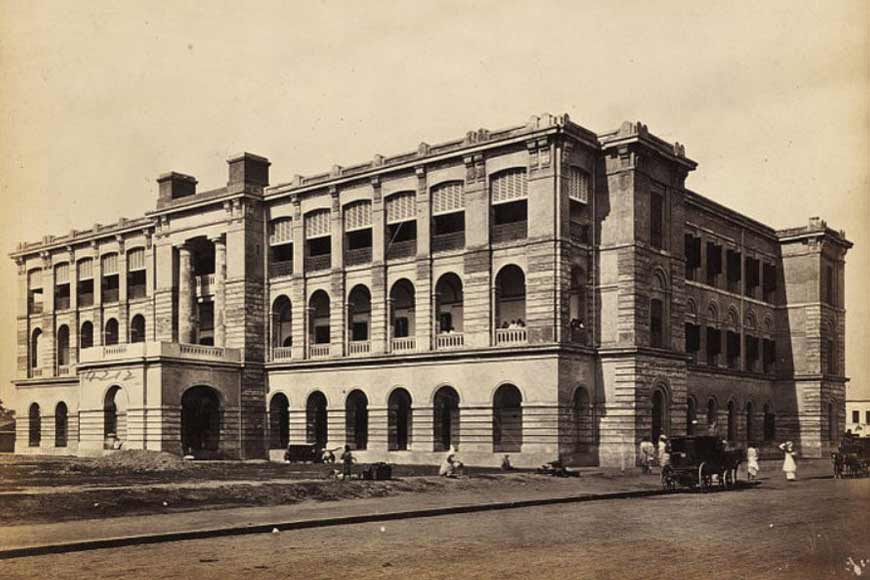
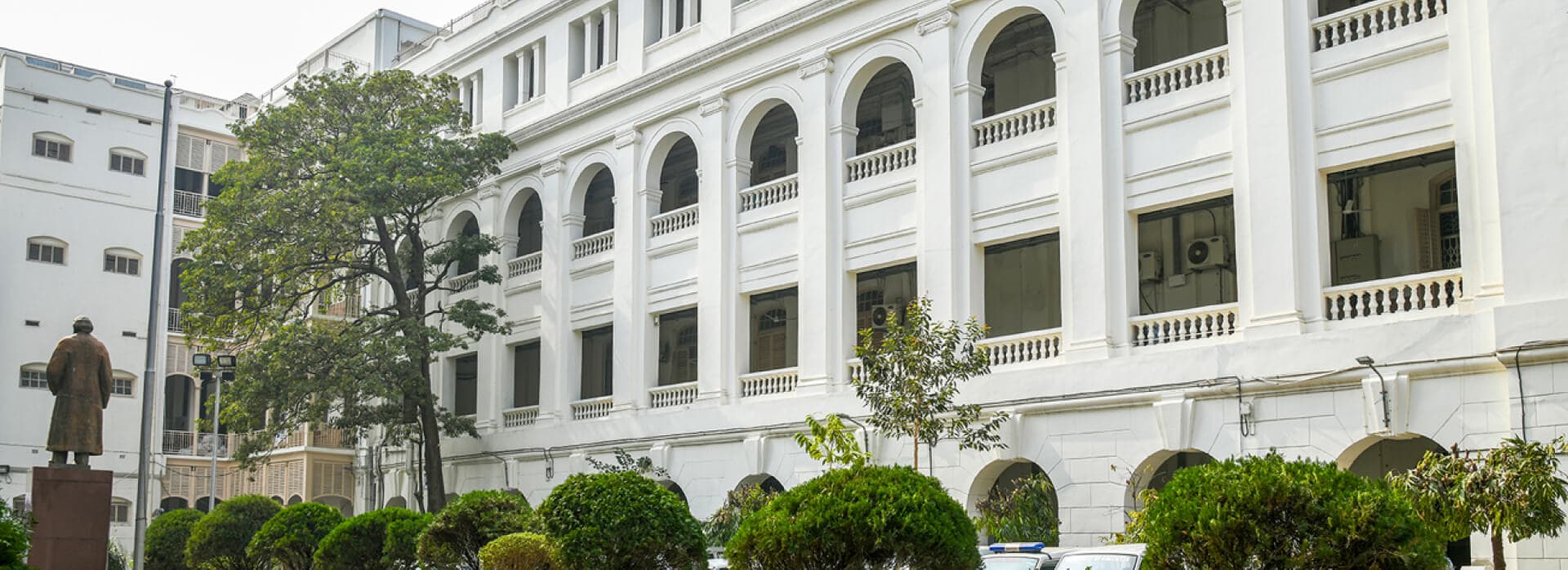
The University of Calcutta was founded in 1857. Dr. Fredrick John, the education secretary to the then British Government in India, first tendered a proposal to the British Government in London for the establishment of a university in Calcutta, along the lines of London University, but at that time the plan failed to obtain the necessary approval. However, a proposal to establish two universities, one in Calcutta and the other in Bombay was later accepted in 1854 and the necessary authority was given through Wood's despatch. The Calcutta University Act came into force on 24 January 1857 and a 41-member Senate was formed as the policy making body of the university. When the university was first established it had a catchment area covering the area from Lahore to Rangoon (now in Myanmar)—the largest of any Indian university.

In 1914, the University College of Science or Rajabazar Science College was established. A centralized Post-Graduate system of teaching and research was started in 1917. The Asutoish building was opened in 1926. The Asutosh Museum of Indian Art started in 1937.in 1937 when Dr. Syamaprasad Mookerjee was the Vice-Chancellor, he requested Rabindranath Tagore to compose a song to be adopted as the university song of the University of Calcutta. Tagore composed two songs instead of one. Later the second song, Subho Karmapathe Dharo Nirvayo Gaan was chosen to be the university song.The Institute of Nuclear Physics, the first of its kind in Asia, was founded under the leadership of Meghnad Saha in 1945

The Modernization Era of the University of Calcutta, which began with its establishment in 1857 as the first full-fledged multidisciplinary, Western-style university in South Asia, marked a critical shift toward research-oriented, autonomous higher education. While initially functioning as an examining body similar to the University of London, the institution underwent significant transformations in the early 20th century to become a major center for advanced research and postgraduate stud

Institution’s Innovation Council and incubation ecosystem.
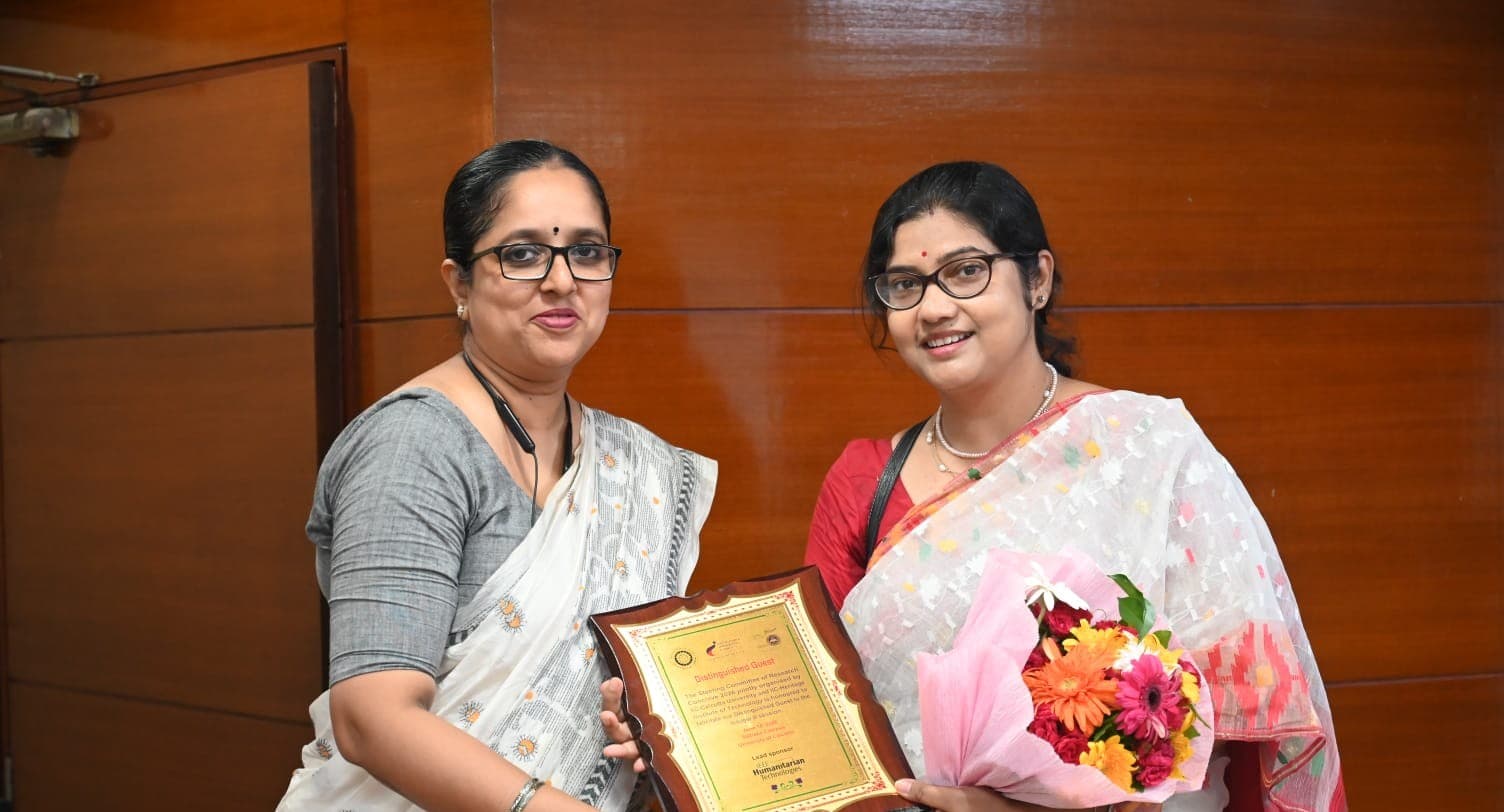
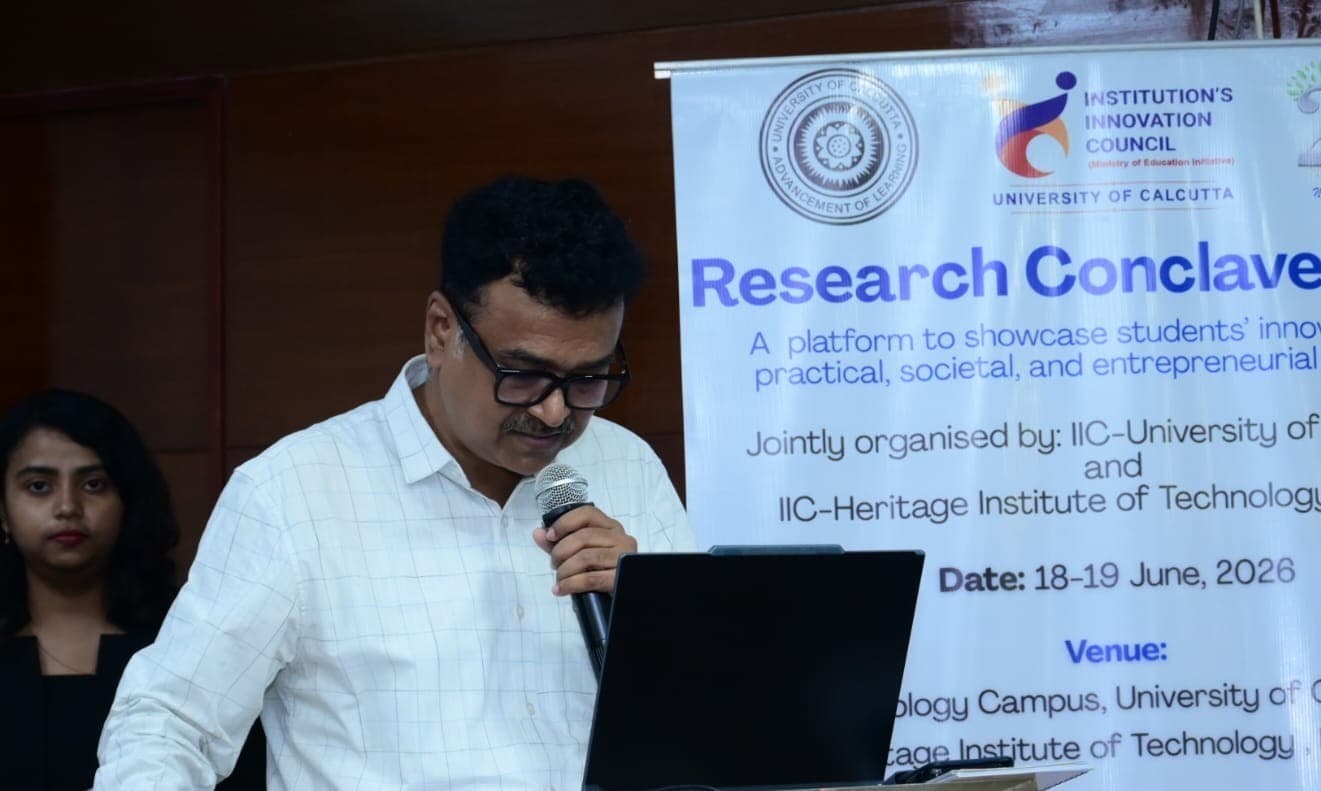
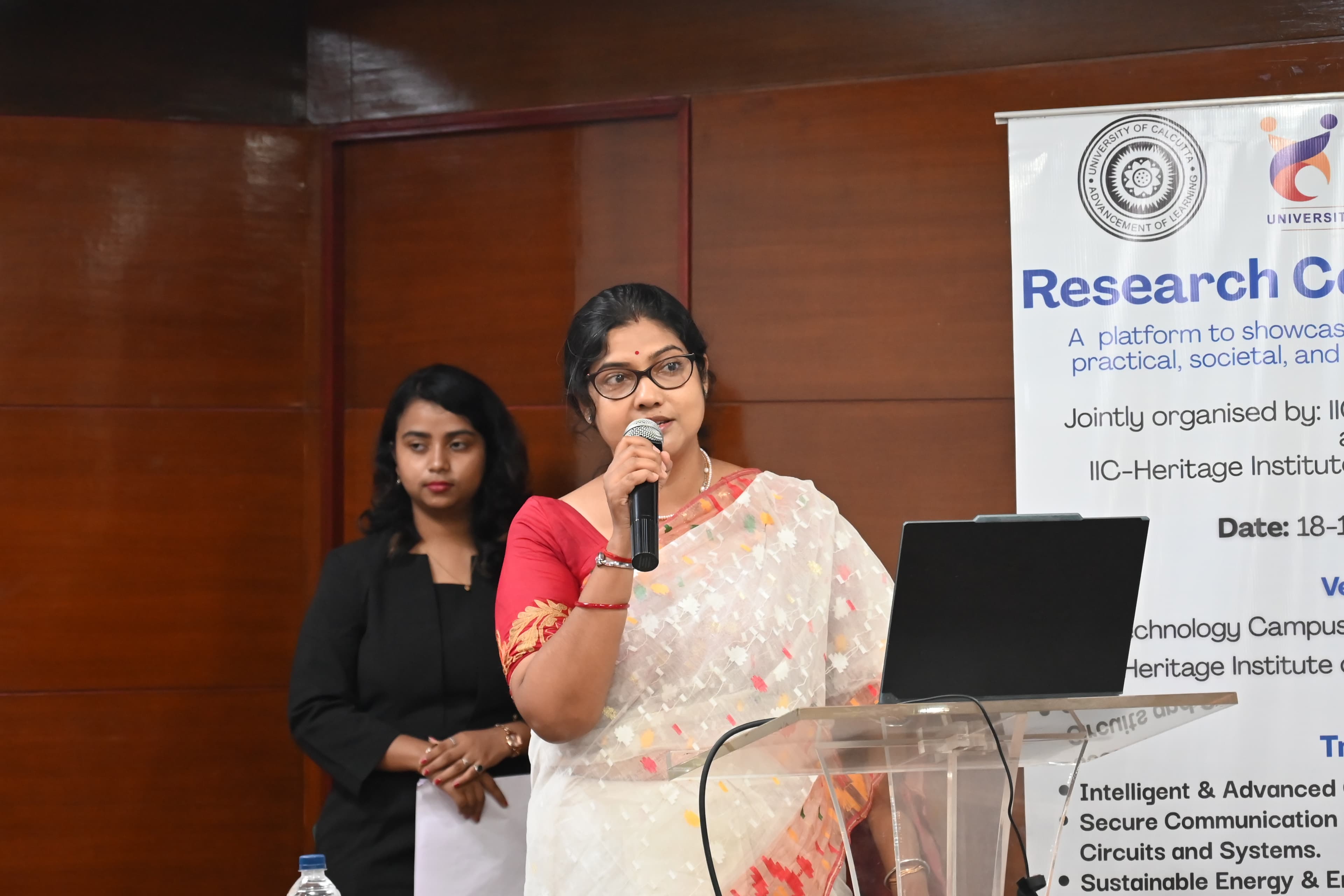
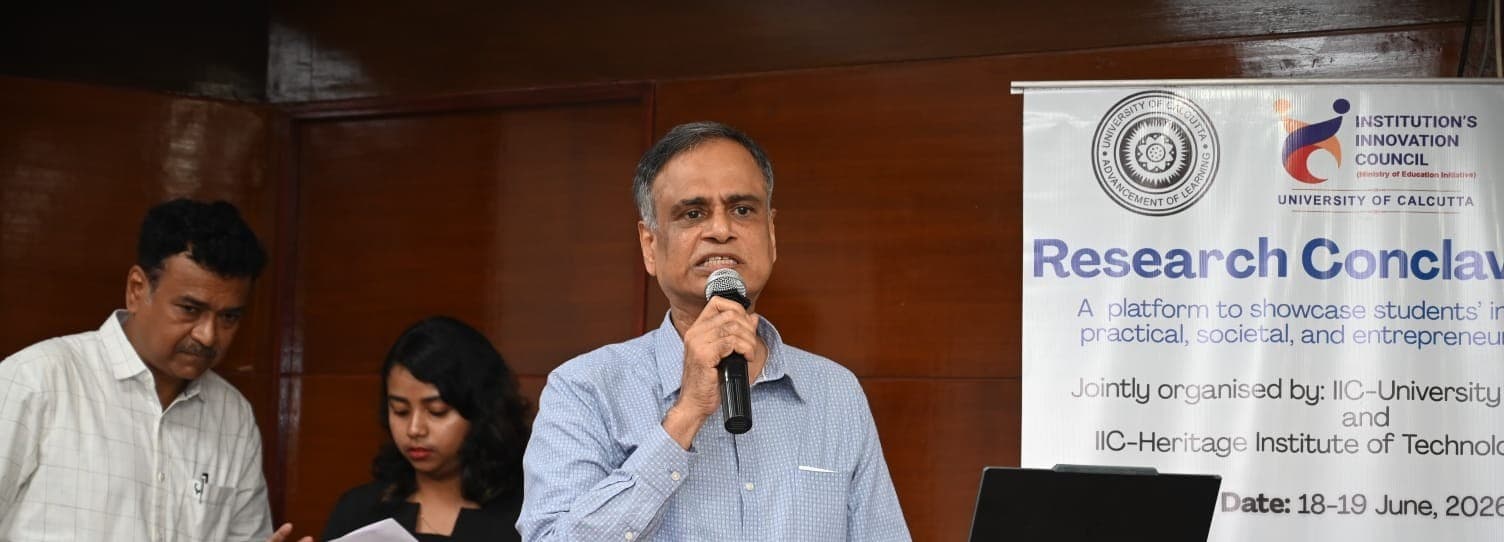
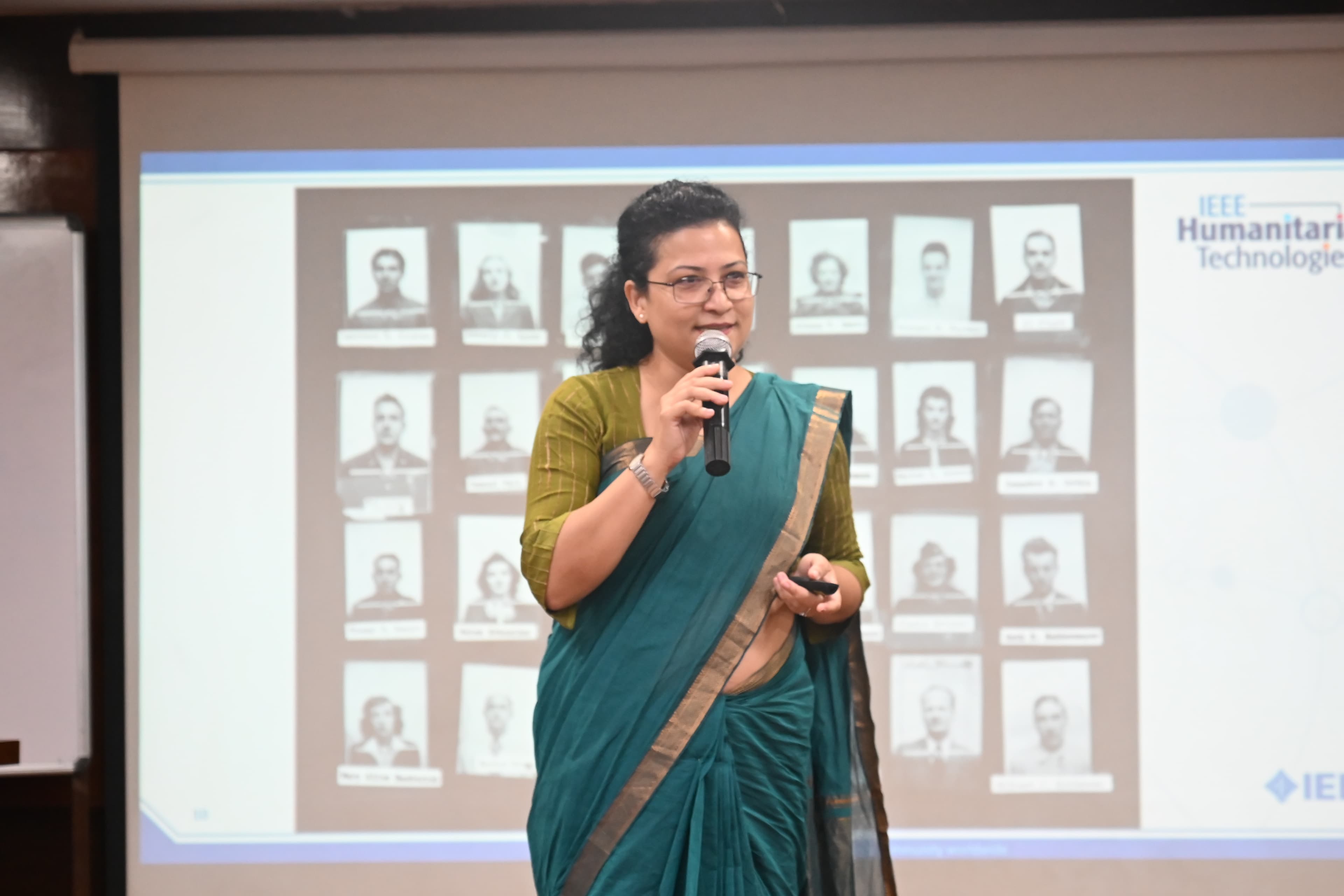
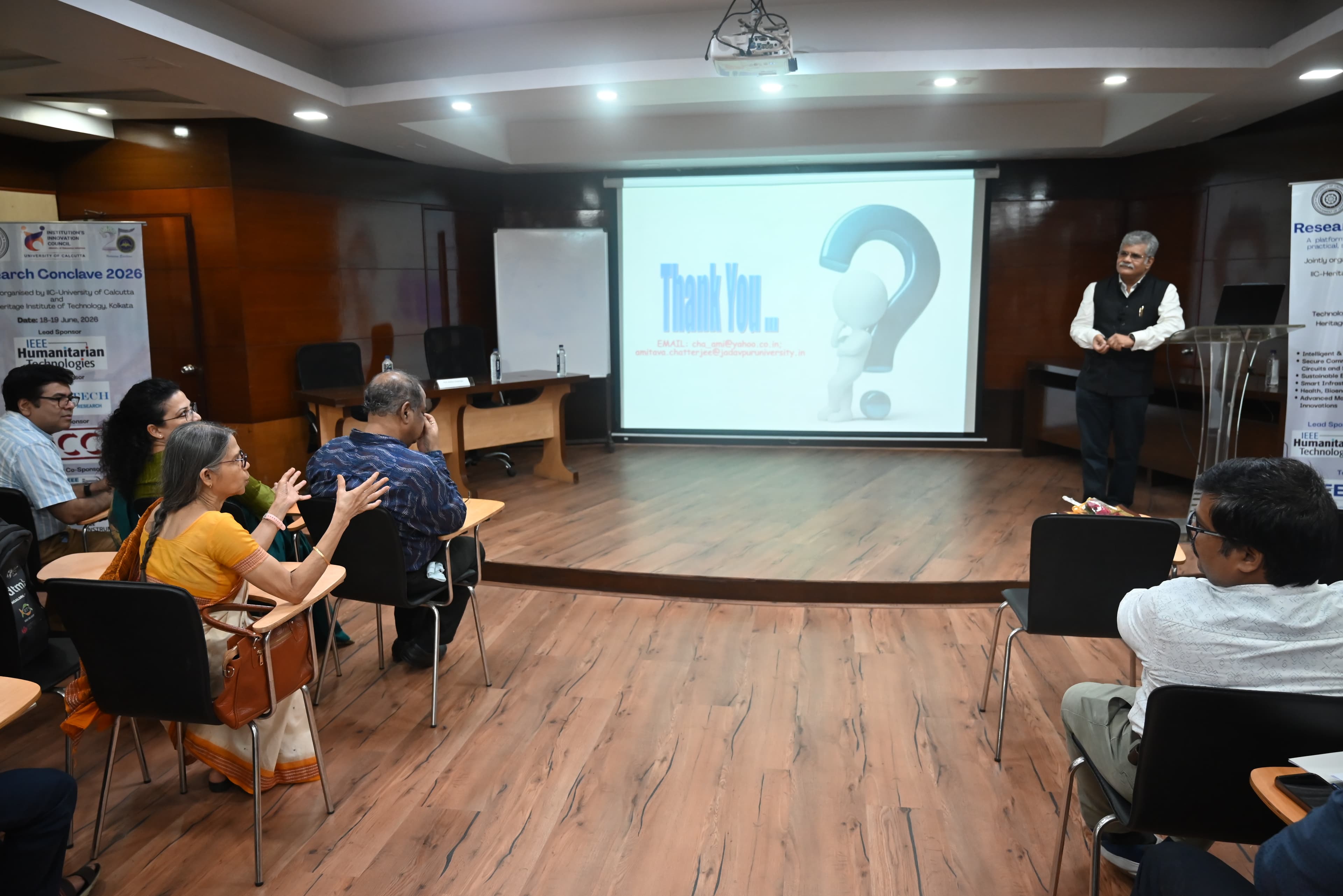
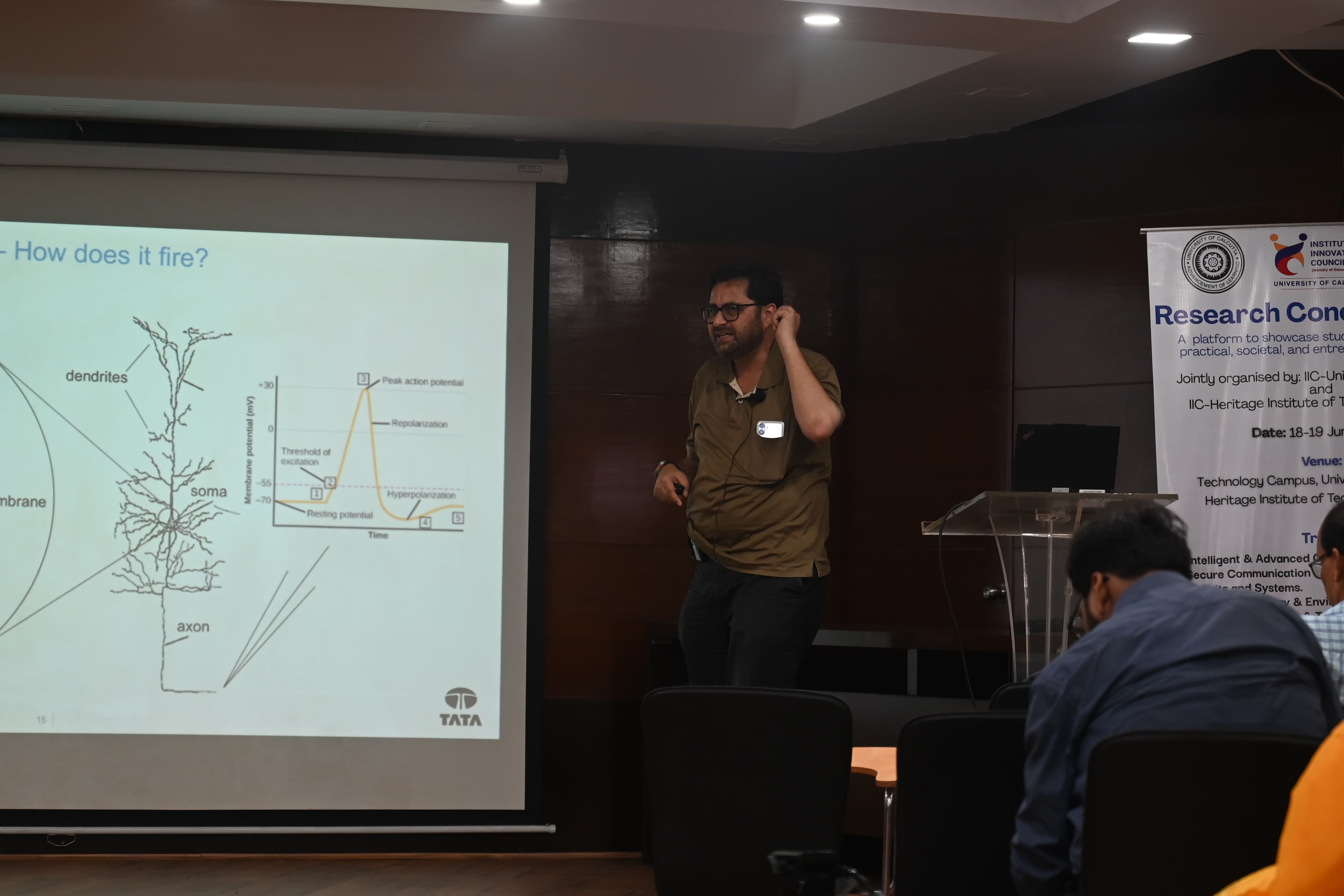
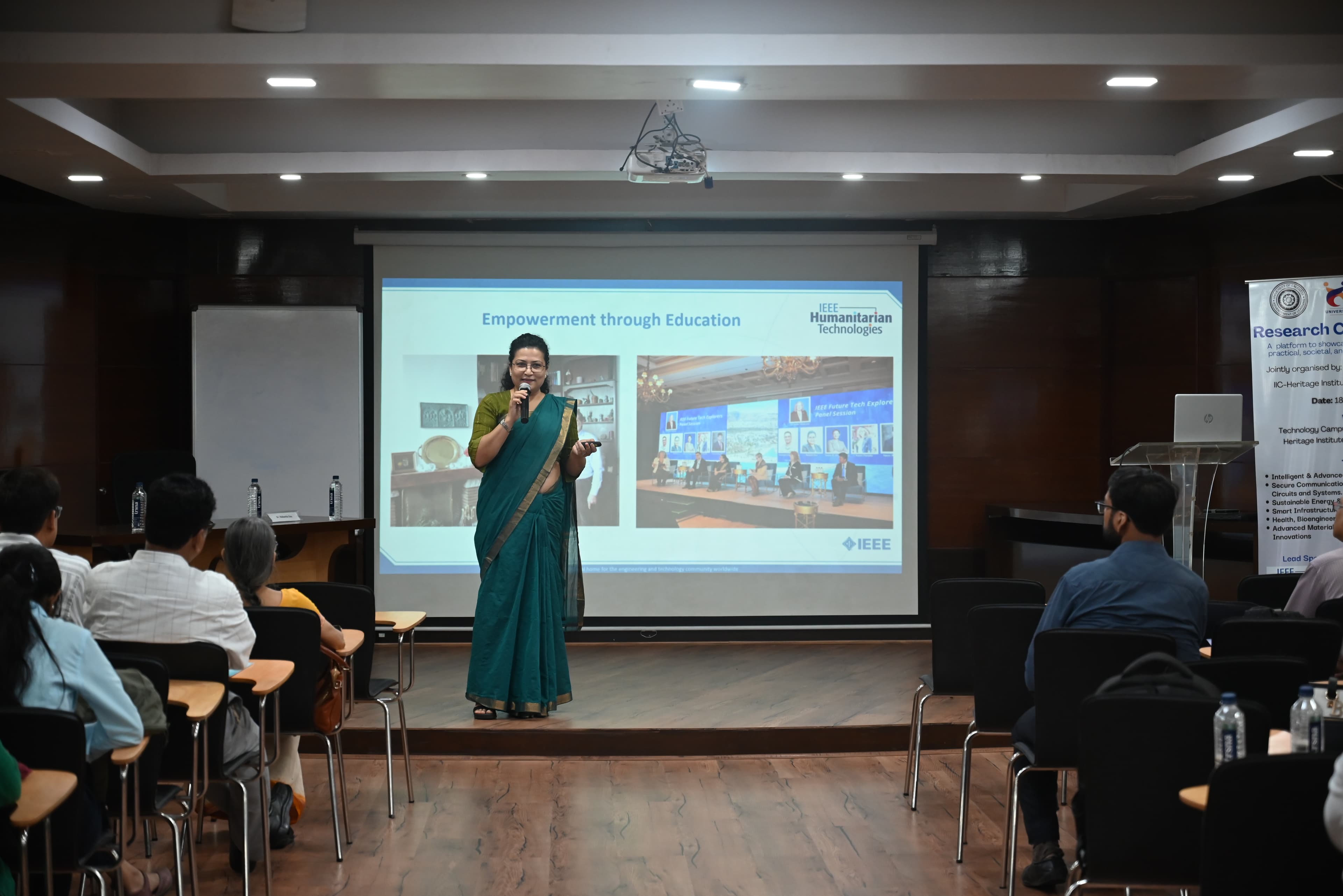
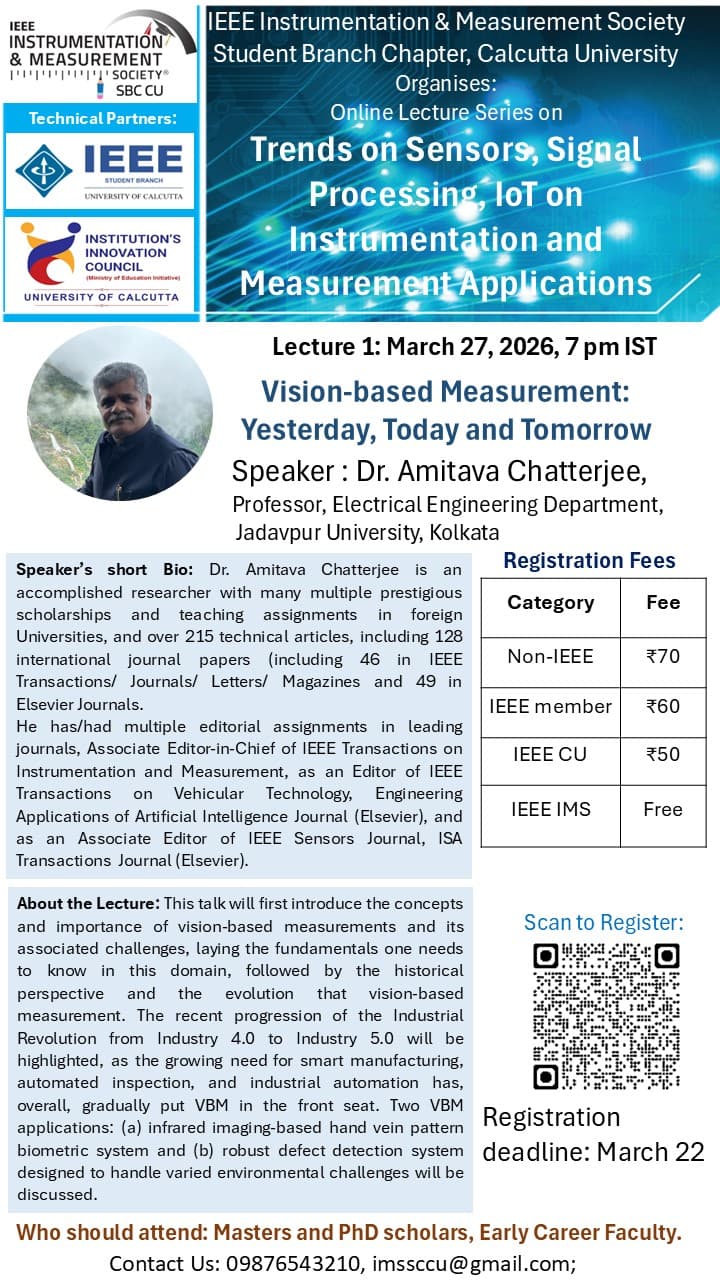
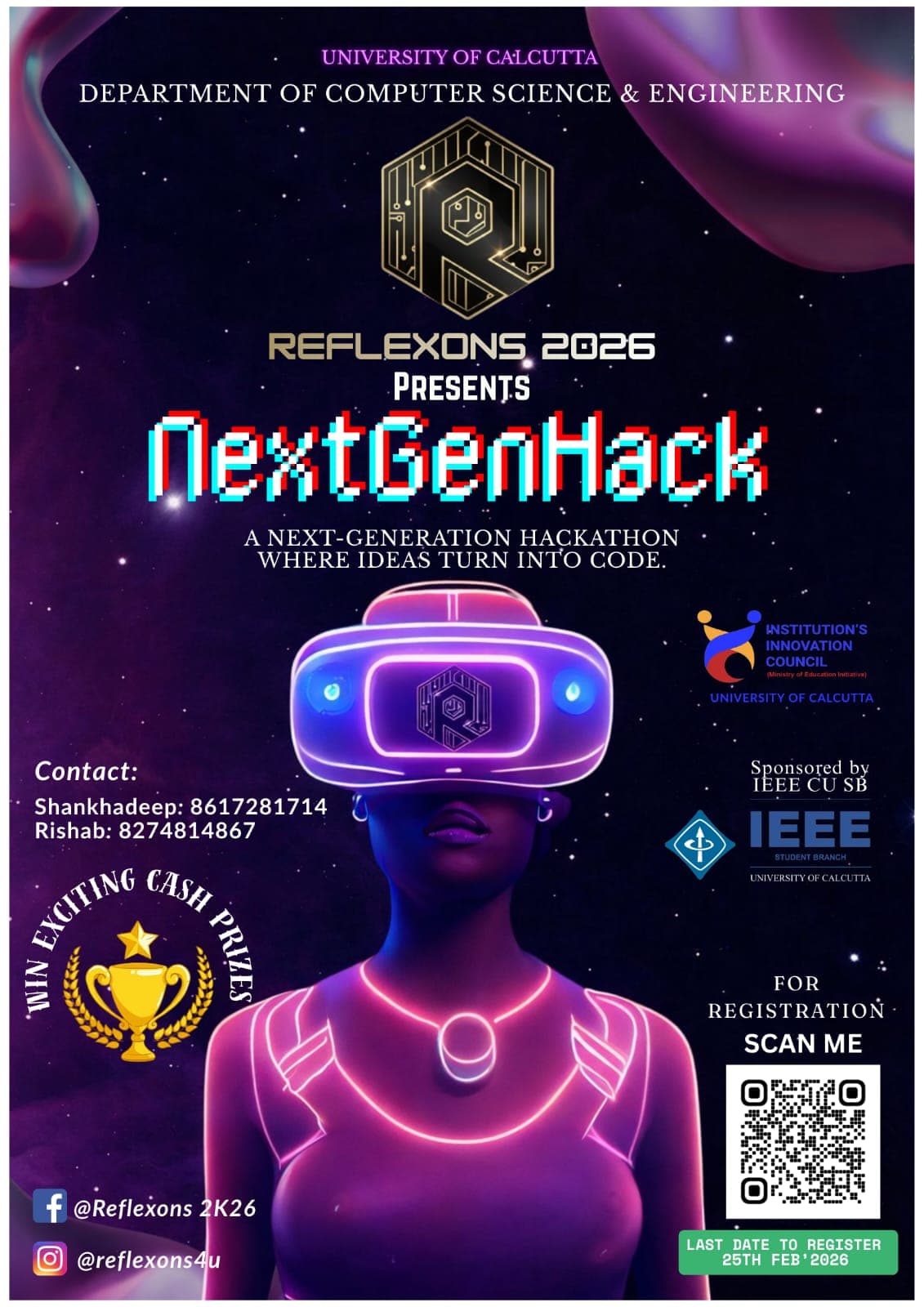
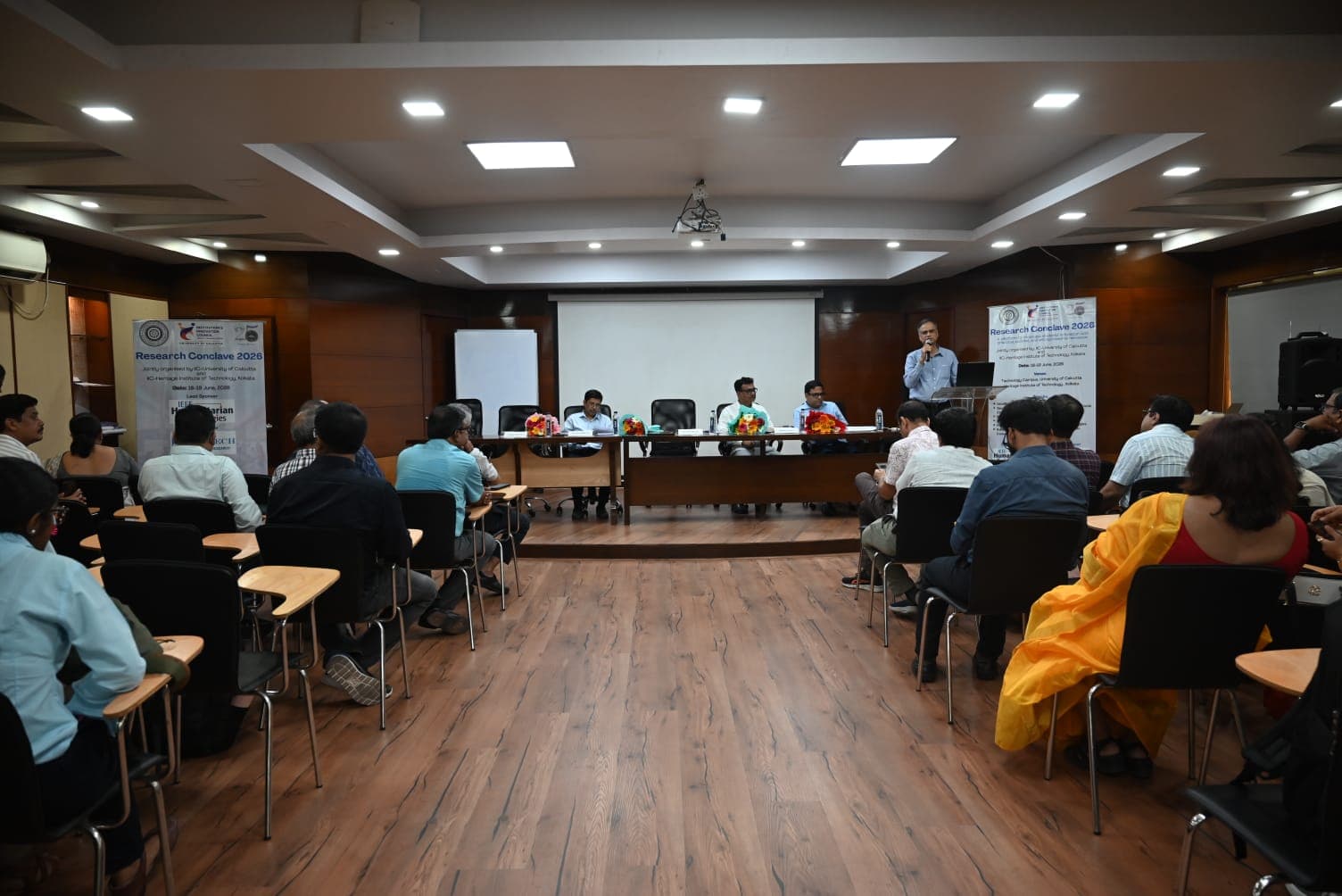
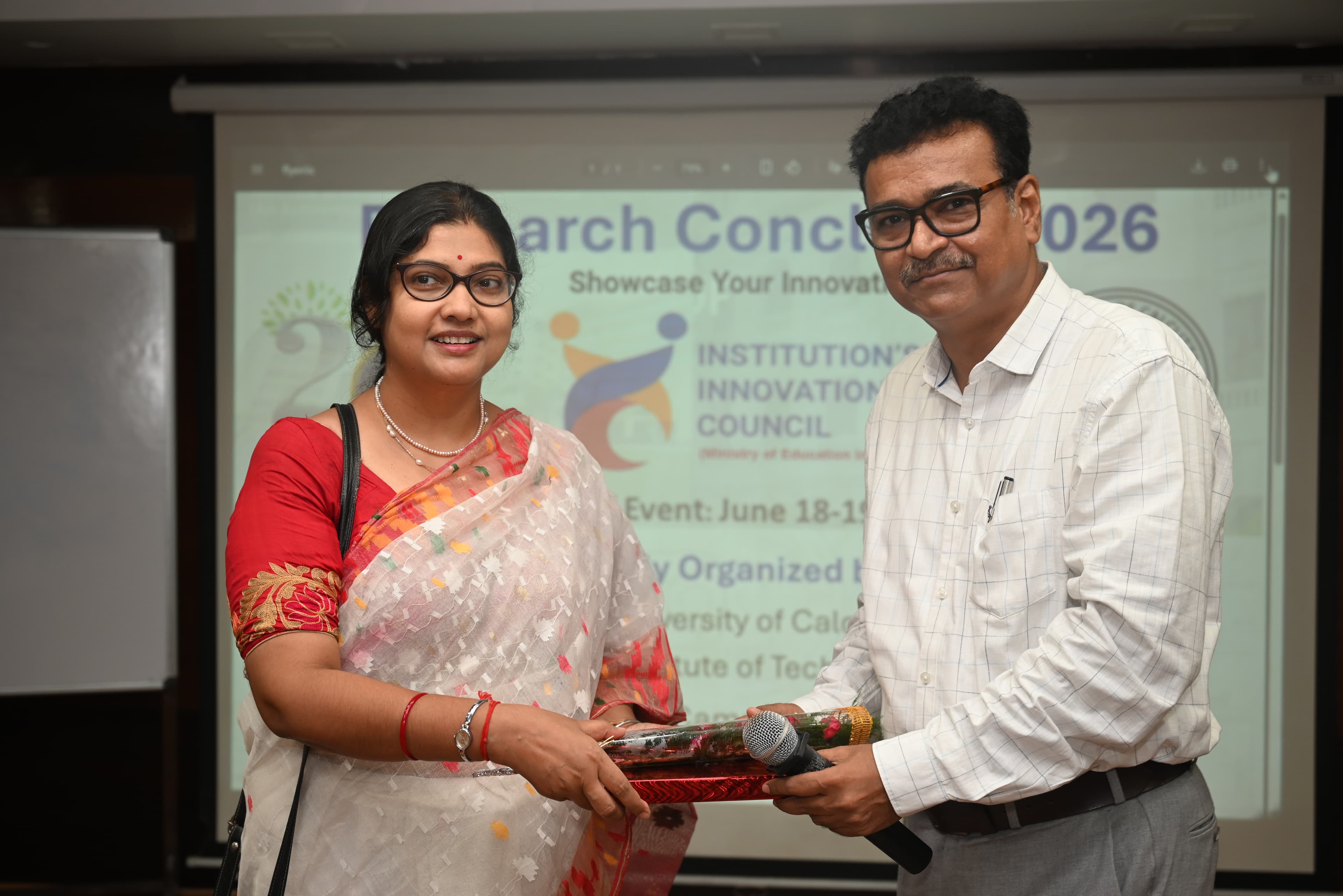
Over the years, the Institution's Innovation Council has successfully organized research conclaves, innovation challenges, entrepreneurship awareness programs, industry interactions and workshops that have inspired students and researchers across the University of Calcutta ecosystem.
Knowledge exchange & dissemination
Connecting academia with industry
Encouraging creative solutions
Building future changemakers
Workshops and training
Innovation rights & protection

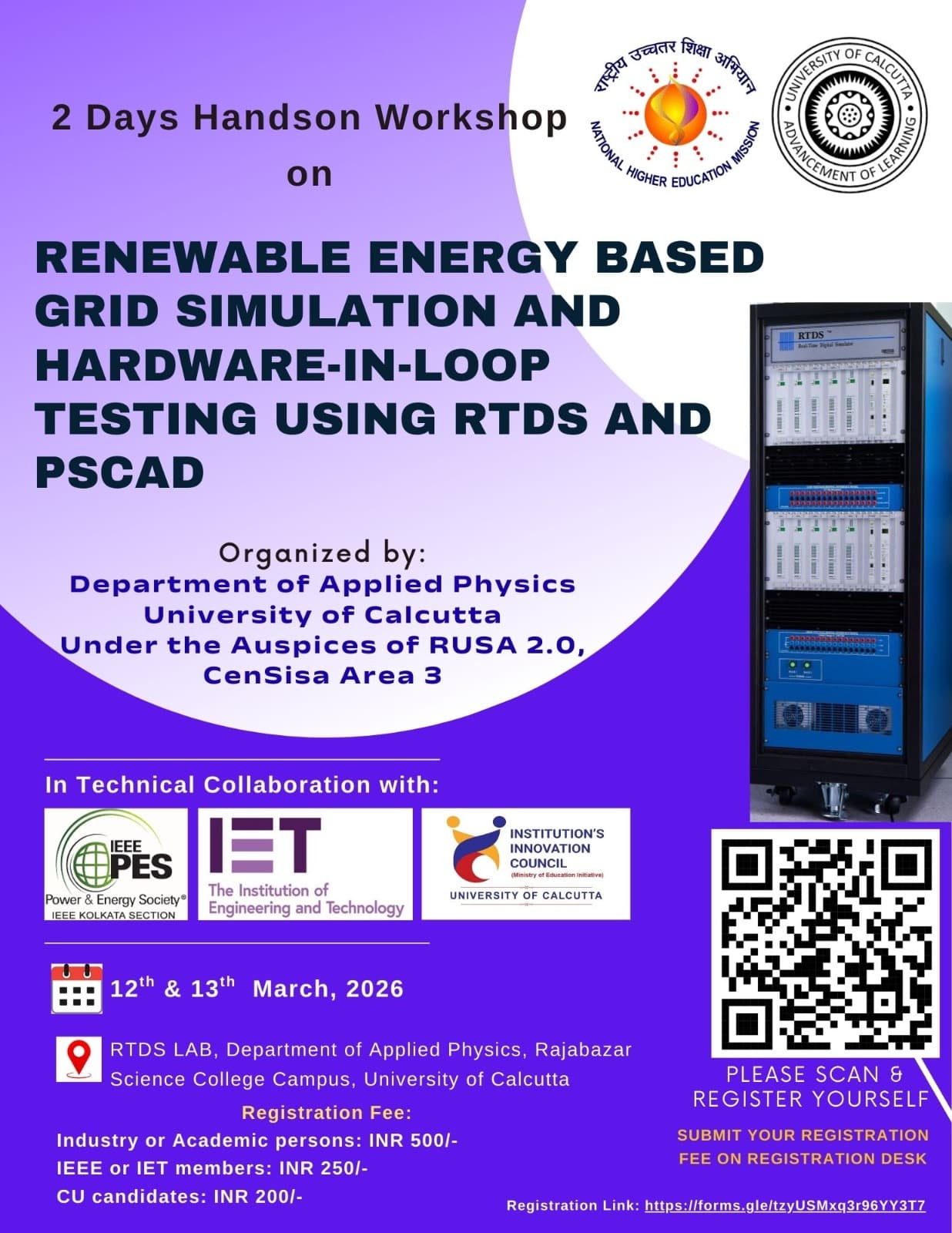
A hands-on workshop on real-time grid simulation and sustainable energy systems.
From curiosity to societal impact — empowering students and researchers to transform ideas into meaningful change.
Every innovation begins with curiosity and imagination.
Exploration transforms ideas into knowledge.
Knowledge evolves into meaningful solutions.
Solutions are scaled into real-world ventures.
Innovation creates lasting societal change.
At the University of Calcutta, innovation is not a destination—it is a journey that transforms ideas into research, research into solutions, and solutions into lasting impact.